


Mobile Command Trailers vs. Mobile Command Vehicles: Which Is Right for Your Agency?
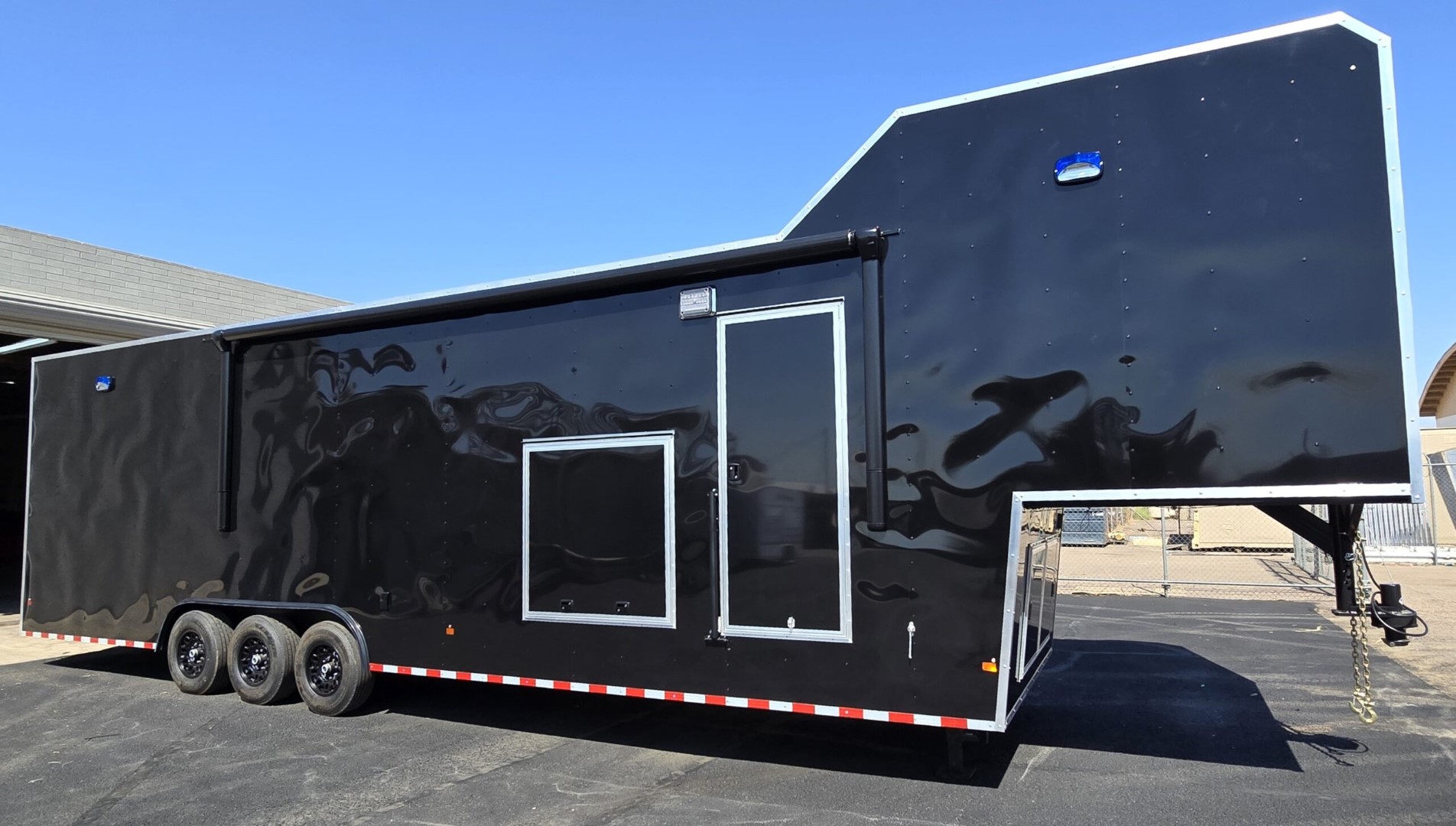
Mobile command centers give public safety teams a dependable place to coordinate operations, manage communications, and make critical decisions in the field. However, agencies often face an important question during the planning process: should they invest in a mobile command trailer or a mobile command vehicle?
Both platforms can support law enforcement, emergency management, military, fire, rescue, and other public safety operations. However, their deployment requirements, available space, transportation needs, and configurations can be very different.
Choosing between mobile command trailers vs. mobile command vehicles ultimately depends on how your agency plans to deploy and use the unit. Understanding those differences can help you invest in a command center that supports your team for years.
What Is a Mobile Command Vehicle?
A mobile command vehicle combines transportation and command capabilities into one self-propelled platform. Depending on the application, it may be built using a van, truck, bus, or specialty vehicle chassis.
Because the command center travels under its own power, agencies can deploy these units quickly without arranging a separate tow vehicle. Once crews arrive, they can establish a functional field command position with relatively little setup.
Mobile command vehicles can include workstations, communications systems, monitors, storage, emergency lighting, generators, climate control, bathrooms, kitchenettes, and other equipment.
Quality Vans & Specialty Vehicles designs custom mobile command center vehicles around each customer’s operational requirements. The company has been building specialty vehicles since 1974 and serves public safety and military organizations throughout the United States and internationally.
What Is a Mobile Command Trailer?
A mobile command trailer provides many of the same operational capabilities. However, it is constructed as a towable trailer rather than a self-propelled vehicle.
That distinction can provide agencies with considerable flexibility.
For example, the tow vehicle can disconnect after placing the trailer at an incident location. The command center can then remain operational while the towing vehicle becomes available for another assignment.
Trailers can also provide substantial interior room for workstations, conference areas, equipment racks, communications systems, storage, and specialized operational spaces.
Quality Vans builds its specialty trailers in-house from the ground up. This approach allows the team to customize structural design, payload capabilities, electrical systems, storage, and interior configurations around an agency’s requirements.
Mobile Command Trailers vs. Mobile Command Vehicles: Key Differences
There is no universal answer when comparing mobile command trailers vs. mobile command vehicles. Instead, agencies should evaluate several practical factors.
Deployment Speed
A mobile command vehicle can be especially useful when rapid deployment is a priority. Because the vehicle and command center are one unit, crews can drive directly to an incident and begin establishing operations.
A trailer requires an appropriate towing vehicle and potentially additional setup. However, agencies that already have capable tow vehicles may find that requirement manageable.
Interior Space
Available workspace can become particularly important during extended incidents.
Trailers can provide large interior layouts without needing to accommodate a driver’s cab or drivetrain. Some configurations can also incorporate slide-outs to increase usable space after deployment.
Quality Vans has built command trailers with dedicated conference rooms, multiple workstations, server racks, equipment storage, monitors, generators, and other mission-specific features.
Mobile command vehicles can also provide generous working areas. However, overall space depends heavily on the chassis and body selected.
Maneuverability
Agencies operating primarily in dense urban environments may prefer the maneuverability of certain mobile command vehicles.
A towable trailer requires additional space for turning, positioning, and parking. Therefore, agencies should consider the types of locations where the command center will most often operate.
Conversely, larger sites, planned events, disaster response locations, and extended operational areas may provide ample room for a command trailer.
Extended Operations
Some incidents require a command post for hours or even days.
In these situations, workspace design becomes especially important. Agencies may require conference areas, multiple operator stations, food preparation equipment, restrooms, refrigeration, storage, climate control, and independent power.
Both platforms can support extended operations when properly designed. However, larger trailers can provide additional opportunities for separating operational areas and accommodating more personnel.
Transportation Resources
Another important consideration is whether the agency already owns appropriate towing equipment.
A command vehicle contains its own drivetrain, so no additional vehicle is needed for transportation.
A command trailer requires a suitable tow vehicle. However, the agency may already have trucks capable of performing that role.
Fleet resources should therefore be considered when comparing the overall requirements of each option.
What Equipment Can a Mobile Command Center Include?
Regardless of the platform, customization determines how effectively a command center supports its mission.
Depending on operational requirements, a mobile command center may include:
- Multiple operator workstations
- Conference or briefing areas
- Monitors and display systems
- Server and communications racks
- Radio and connectivity equipment
- Camera and situational awareness systems
- Pneumatic or telescoping masts
- Emergency and scene lighting
- Independent generator systems
- Electrical outlets and charging stations
- HVAC systems
- Custom cabinetry and equipment storage
- Refrigerators and microwaves
- Restroom facilities
- Exterior awnings and work areas
For example, Quality Vans has constructed command trailers featuring conference rooms, multiple workstations, integrated displays, server racks, generators, scene lighting, storage systems, and connectivity equipment.
The most useful features depend on the people who will actually operate the unit.
Which Mobile Command Center Is Better for Your Agency?
Agencies should begin by examining deployment scenarios rather than immediately choosing a vehicle type.
A mobile command vehicle may make sense when rapid response, frequent relocation, and straightforward deployment are priorities. It can also work well when operating locations have limited room for maneuvering a trailer.
Meanwhile, a mobile command trailer may be attractive when the agency needs substantial interior space, extended deployment capability, or flexibility to separate the tow vehicle from the command center.
Before developing specifications, consider several questions:
How many people will typically work inside the command center? How long will deployments last? What communications equipment must be supported? Will the unit need dedicated conference areas? What power requirements must be accommodated? Where will the unit usually operate?
Answering these questions can make the design process far more productive.
Custom Design Matters More Than the Platform
Choosing between mobile command trailers vs. mobile command vehicles is only the beginning. The interior layout, technology, electrical infrastructure, payload capacity, storage, and workflow ultimately determine how useful the unit becomes in the field.
Quality Vans & Specialty Vehicles builds specialty vehicles and trailers to order rather than forcing agencies into standardized configurations.
Its capabilities include in-house fabrication, electrical wiring and design, generator installation, custom cabinetry, lighting, insulation, and structural solutions. Quality Vans also maintains experienced craftsmen and AWS-certified structural welders while offering assistance with government procurement requirements.
Because the company can build both specialty vehicles and trailers, agencies can evaluate the advantages of each platform without limiting themselves to one type of command center.
Build the Right Mobile Command Center for Your Mission
The right command center should reflect how your personnel actually respond, communicate, collaborate, and operate in the field.
For some departments, that means a highly mobile self-propelled command vehicle. For others, a spacious mobile command trailer provides the flexibility and operational room they need.
Quality Vans & Specialty Vehicles has been putting organizations’ specialized operations on wheels since 1974. Its team can help agencies evaluate designs, budgets, specifications, equipment requirements, and procurement considerations before developing a custom solution.
If your agency is planning a new mobile command center, contact us at Quality Vans & Specialty Vehicles to discuss your operational requirements and explore the right platform for your mission.


